
Pinched Nerve Treatment in Owensboro
Drug-free pinched nerve relief in Owensboro, KY. We treat nerve compression in the neck and low back with gentle adjustments, low-force care, and rehab.
Chiropractic care for pinched nerve
Get to the root of your pinched nerve
Also known as: Nerve Impingement, Radiculopathy, Compressed Nerve
If you're dealing with sharp, radiating pain — or numbness and tingling that shoots down your arm or leg — a pinched nerve is likely the culprit. It's one of the most common conditions Dr. Atnip treats for patients throughout Owensboro. Whether the compression is in your neck, low back, or somewhere in between, the goal is always the same — relieve the pressure on that nerve with a clear, drug-free plan that fixes the cause, not just the symptom.
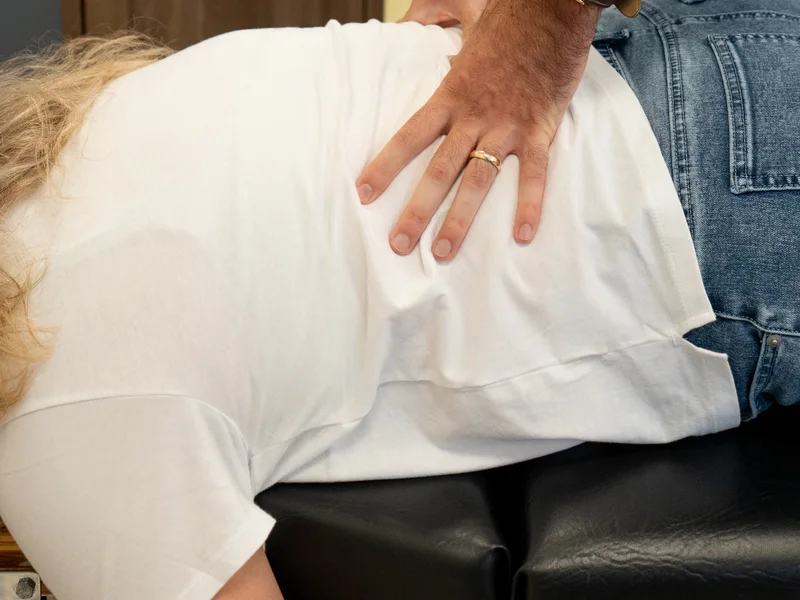
Symptoms of pinched nerve
- ✓Sharp, shooting, or burning pain that radiates into an arm or leg
- ✓Numbness or a "pins and needles" sensation along the nerve path
- ✓Weakness in a hand, arm, foot, or leg
- ✓Pain that worsens with certain positions — like looking down or sitting for long periods
- ✓Muscle fatigue or difficulty gripping objects
- ✓A dull ache at the neck or low back where the nerve originates
Common causes
- Bulging or herniated disc pressing on a nerve root
- Bone spurs from spinal arthritis narrowing the nerve canal
- Tight or inflamed muscles compressing a nerve (as in piriformis syndrome)
- Poor posture and forward-head position that load the cervical discs
- Repetitive strain or overuse injuries at work or in sport
- Auto-accident or sports trauma that shifts spinal alignment
- Degenerative disc changes that reduce space in the foramen
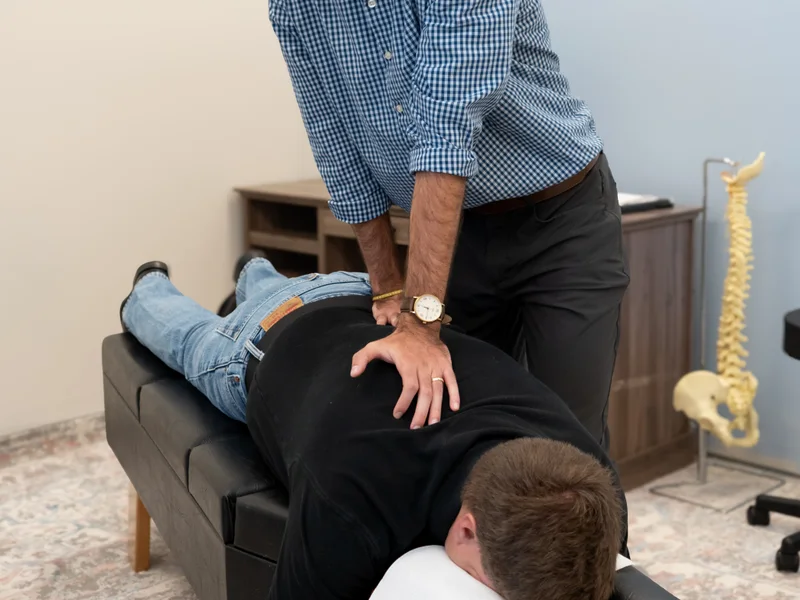
Our approach
How we treat pinched nerve in Owensboro
- Step 1
Thorough exam
We take a detailed history and perform orthopedic, neurological, and movement testing to identify exactly which nerve is compressed and what structure is causing it.
- Step 2
A clear, personalized plan
You'll receive a plain-English explanation of what we found and a specific, time-bound plan — not open-ended treatment. We set honest expectations and tell you if your case needs a specialist.
- Step 3
Gentle treatment & rehab
We combine spinal adjustments, manual therapies, and corrective exercise to relieve nerve pressure now and rebuild the stability that keeps compression from returning.
The basics
Understanding pinched nerve
A pinched nerve happens when surrounding tissue — a bulging disc, a bone spur, a tight muscle, or an inflamed joint — presses on a nerve root as it exits the spine. In the neck (cervical spine), that pressure typically sends pain, tingling, or weakness into the shoulder, arm, or hand. In the low back (lumbar spine), it usually radiates into the hip, buttock, or leg — a pattern most people recognize as sciatica. The medical terms radiculopathy and nerve impingement describe the same basic problem from different angles.
The encouraging part is that nerve compression responds well to conservative, drug-free care when caught early. Chiropractic adjustments restore proper joint motion and reduce the mechanical irritation driving the compression, and low-force Activator Method work gives us a gentler option when a segment is too acute for a manual thrust. The key is an accurate exam that pinpoints exactly where the nerve is being compressed and why — so your care plan targets the source instead of chasing symptoms around.
$27
New Patient Special
Consultation, exam, and x-rays
No obligation, no packages pushed on you — come find out what's actually going on and decide from there.
- 1 Book online or call
- 2 Full exam and consultation
- 3 X-rays and analysis
Types of pinched nerves we treat
Nerve compression can occur at several points along the spine, and the symptoms depend on exactly where the pressure is. We regularly help Owensboro-area patients with:
- Cervical radiculopathy (neck) — a compressed nerve root in the neck that sends pain, numbness, or tingling into the shoulder, arm, or hand. Often related to a disc herniation or bone spur at C5–C7. Responds well to gentle cervical adjustments, with digital X-rays to confirm the level involved. See also: neck pain and arm pain.
- Lumbar radiculopathy (low back) — nerve compression in the lumbar spine that radiates into the hip, buttock, or leg. The most recognized form is sciatica, which follows the path of the sciatic nerve. Targeted adjustments and corrective exercise relieve the pressure without surgery.
- Disc-related nerve compression — when a bulging or herniated disc is the culprit, gentle, specific adjustments and manual therapies reduce the mechanical irritation at the nerve root. See our disc injury page for more on how we approach this.
- Foraminal stenosis — narrowing of the opening (foramen) where the nerve exits the spine, often from bone spurs or degenerative disc changes. Adjustments and targeted rehab slow the progression and restore as much space as possible.
- Muscle-related nerve entrapment — a tight piriformis or scalene muscle can compress a nearby nerve even without disc involvement. Soft-tissue work and corrective exercise are first-line here.
Your exam tells us which pattern fits — so your plan targets the actual source of compression.
When to see a chiropractor in Owensboro
Early care usually means faster, more complete relief from nerve compression. Book an exam if you notice:
- Shooting, burning, or radiating pain in an arm or leg that has lasted more than a few days
- Persistent numbness or tingling in the fingers, hand, foot, or toes
- Weakness when gripping objects or climbing stairs
- Symptoms that get worse with sitting, bending forward, or looking down
- Nerve pain that started after a car accident, fall, or heavy lifting
- Recurring episodes of nerve pain that clear up briefly and then return
What to expect at your first visit
Your first appointment is about 15–30 minutes and focused entirely on understanding what is compressing your nerve before we treat it. We’ll:
- Listen to your story — when symptoms started, what makes them better or worse, and exactly where the radiating pain or numbness travels.
- Examine thoroughly — orthopedic and neurological testing (reflexes, sensation, muscle strength) to map the nerve distribution and pinpoint the level of compression.
- Explain what we found — in plain English, with a specific, time-bound care plan and honest expectations for recovery — including a referral if your case warrants specialist evaluation.
Drug-free pinched nerve relief — without medication or surgery
Pain medication can dull the ache of a pinched nerve for a few hours, but it does nothing to remove the disc, bone spur, or tight muscle that is compressing the nerve in the first place. Surgery is sometimes necessary, but it’s rarely the first step — and most patients with nerve compression improve significantly with conservative chiropractic care. We combine gentle chiropractic adjustments, low-force Activator Method care when a nerve-irritated segment won’t tolerate a manual thrust, and corrective exercise into one coordinated plan — relieving the pressure now while rebuilding the stability that prevents it from returning. If your exam ever reveals that you need imaging, specialist consultation, or surgical evaluation, we’ll tell you honestly and help coordinate that care right away.
Why Owensboro-area patients choose Atnip Chiropractic
Patients from Owensboro trust Atnip Chiropractic with nerve pain because we treat the compression, not just the symptoms. Dr. Atnip takes the time to map exactly where and why the nerve is being irritated, then builds a plan specific to your spine — not a one-size-fits-all protocol. Whether you’re dealing with sciatica shooting down your leg, a disc injury pressing on a cervical root, or neck pain that radiates into your arm, we use the gentlest effective approach and screen honestly for anything that needs specialist care.
Ready to get started? Our New Patient Special makes your first visit easy, and you can book an appointment online in under a minute.
Why choose chiropractic
Chiropractic care vs. the typical pinched-nerve routine
| Comparison factor | Chiropractic Care | Pain Meds & Surgery |
|---|---|---|
| Addresses the root cause | ✓Relieves mechanical compression | ✕Masks the symptoms |
| Drug-free & non-invasive | ✓Always | ✕Rarely |
| Risk of side effects | ✓Minimal | ✕Higher (meds, surgery) |
| Personalized to you | ✓Custom care plan | ✕One-size-fits-all |
| Builds long-term stability | ✓Rehab included | ✕Seldom addressed |
| Typical recovery | ✓Active & gradual | ✕Often lengthy or recurring |
Treatment options
Services we use to relieve pinched nerve
Chiropractic Care
Gentle, precise chiropractic adjustments in Owensboro, KY that restore motion to restricted joints and relieve back pain, neck pain, and headaches at the source.
Learn more →Activator Method Technique
Activator Method chiropractic in Owensboro — a spring-loaded, low-force instrument adjustment for all ages, backed by decades of research. Gentle, precise, effective.
Learn more →Auto Accident Care
Hurt in a car accident near Owensboro? Dr. Atnip treats whiplash and soft-tissue injuries drug-free and documents everything for your insurance claim.
Learn more →X-Rays
On-site digital X-rays in Owensboro, KY, to get to the bottom of what's causing your pain and discomfort so we can build a plan to get you feeling great again.
Learn more →Related conditions
Other conditions we treat in Owensboro
Patient reviews
What our Owensboro patients say
“Great experience! Everyone was friendly and professional, and I felt comfortable from the start. They really take the time to listen and make sure you’re taken care of. I would definitely recommend them to anyone!”
“5 stars isn't enough! This chiropractor office is amazing. From the front desk to the adjustment, everyone is so friendly and genuinely helpful. Dr Atnip is amazing! He listened to my concerns, explained everything clearly, and never made me feel rushed. I walked out feeling so much better than when I walked in. Highly recommend!”
“Dr. Atnip is incredible! He really wants to know what is wrong and will get you on a plan to not just get you feeling better, but make you feel like family and really fix any pain problems you may be having!”
What causes a pinched nerve in the neck or back?+
The most common causes are a bulging or herniated disc, a bone spur from spinal arthritis, or a tight muscle that compresses a nerve root as it exits the spine. Poor posture, repetitive strain, and old injuries can all contribute. Our exam identifies which structure is doing the compressing so we can target it directly.
Can a chiropractor help a pinched nerve?+
Yes — chiropractic care is one of the most effective conservative treatments for nerve compression. Adjustments restore joint motion and reduce the mechanical irritation driving the problem, and low-force Activator Method work gives us a gentler option when the segment is too acute for a manual thrust. Most patients notice meaningful improvement within the first few visits.
How many visits will I need for a pinched nerve?+
It depends on how long you've had it, what's compressing the nerve, and how far the symptoms have spread. After your exam, Dr. Atnip gives you a specific, time-bound care plan with a realistic endpoint — not open-ended visits with no finish line.
Will my insurance cover pinched nerve treatment?+
We accept many major insurance plans and offer affordable self-pay options. Share your coverage details before your first visit and we'll verify your benefits so there are no surprises.
Is chiropractic treatment for a pinched nerve safe?+
Yes. We screen every patient thoroughly before beginning care. If your exam suggests the compression is severe — or if you have progressive weakness or other red flags — we'll refer you to the appropriate specialist rather than proceeding with manual care.
Do I need an MRI before seeing a chiropractor?+
Not necessarily. Most nerve-compression cases don't require imaging before we can begin care. We screen for red flags on your first visit and order imaging only when it will genuinely change your treatment plan.
How is a pinched nerve different from sciatica?+
Sciatica is a specific type of pinched nerve — compression of the sciatic nerve, which runs from the low back through the buttock and down the leg. A pinched nerve is the broader category and can occur in the neck (causing arm symptoms) or anywhere along the spine. See our dedicated page on sciatica for more detail.
When should I go to the ER instead of a chiropractor?+
Seek emergency care immediately if you notice rapidly progressive weakness in an arm or leg, loss of bladder or bowel control, or numbness in the groin or inner thighs. These can signal a serious spinal emergency — cauda equina syndrome — that requires prompt surgical evaluation.
Can a pinched nerve go away on its own?+
Mild cases sometimes resolve with rest and time. But if symptoms have lasted more than a few days, are getting worse, or include weakness, conservative chiropractic care speeds recovery significantly and helps prevent the problem from becoming chronic or causing lasting nerve damage.
Do you treat neck-related pinched nerve pain that goes into the arm?+
Absolutely. Cervical radiculopathy — nerve compression in the neck that radiates into the shoulder, arm, or hand — is a common presentation we treat for patients across Owensboro. It responds well to gentle cervical adjustments and corrective exercise.